Culture
Rooted, and passed on.
Armenia Fest grows out of the life of St. Apkar Armenian Apostolic Church — a community gathered around the church, the table, and the music that traveled with our families. For one weekend a year, all of it moves out into the open courtyard, and everyone is invited in.
You don't need to be Armenian to enjoy any of it. Come hungry, ask questions, and let a volunteer walk you through the menu.
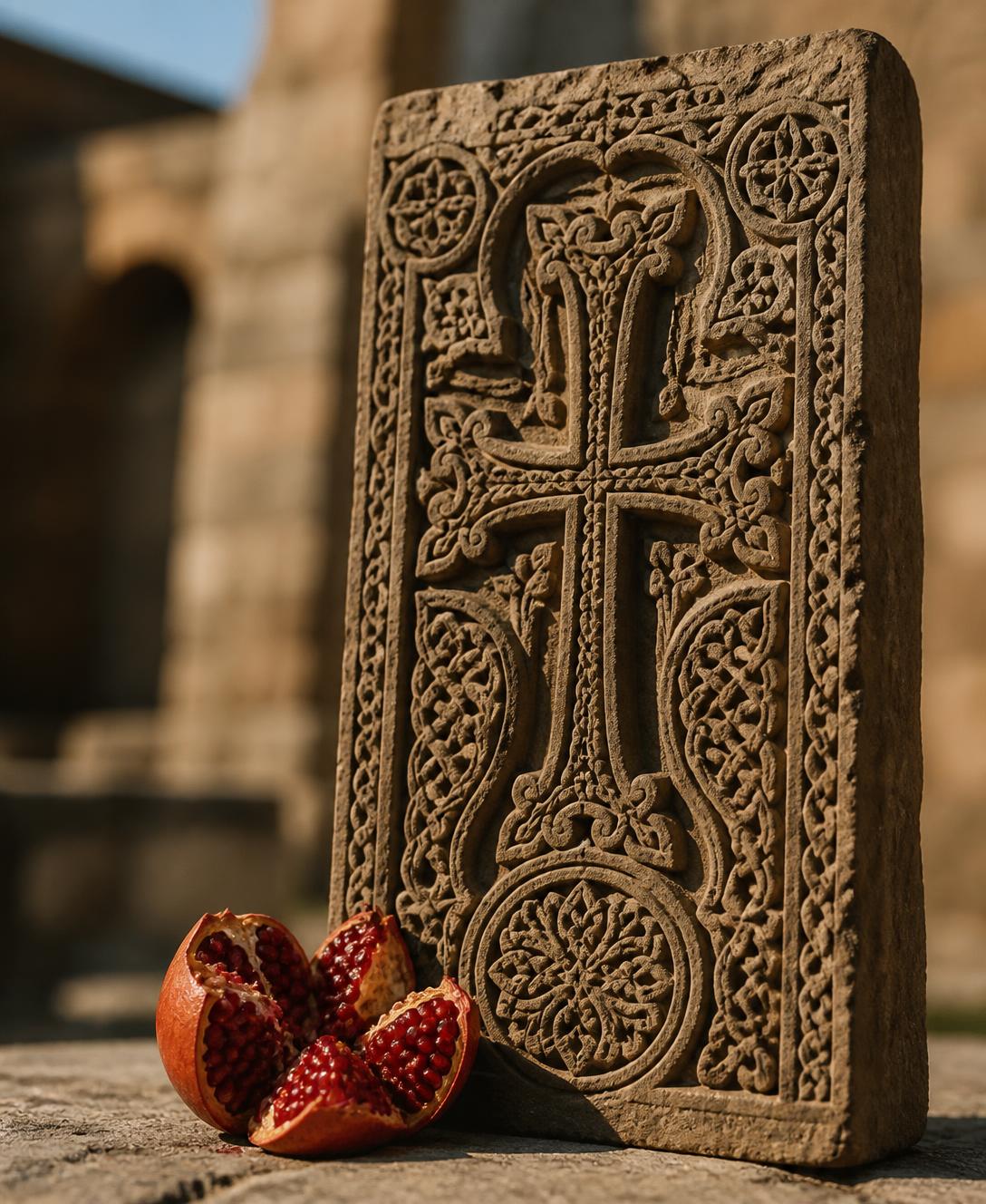
Threads you'll notice
The church
The Armenian Apostolic Church is one of the world's oldest Christian traditions, and the parish has long been the place where Armenian families abroad keep their language and customs close.
The duduk
Armenia's best-known instrument is the duduk, an apricot-wood reed flute with a low, warm voice. You'll hear it alongside oud, clarinet and dhol drum.
Circle dances
Armenian folk dance is danced shoulder to shoulder in a line or circle. When the music starts at the festival, the circle opens for anyone who wants to join.
The alphabet
The Armenian alphabet — Ա Բ Գ Դ — was created in the early fifth century and is still written the same way today.
Pomegranate & apricot
Pomegranates and apricots run through Armenian art, textiles and cooking as symbols of abundance and home.
The kitchen
Kebob, kufta, sarma, boureg and lahmajoun are dishes made in quantity, for a crowd — which is exactly what a festival kitchen is for.
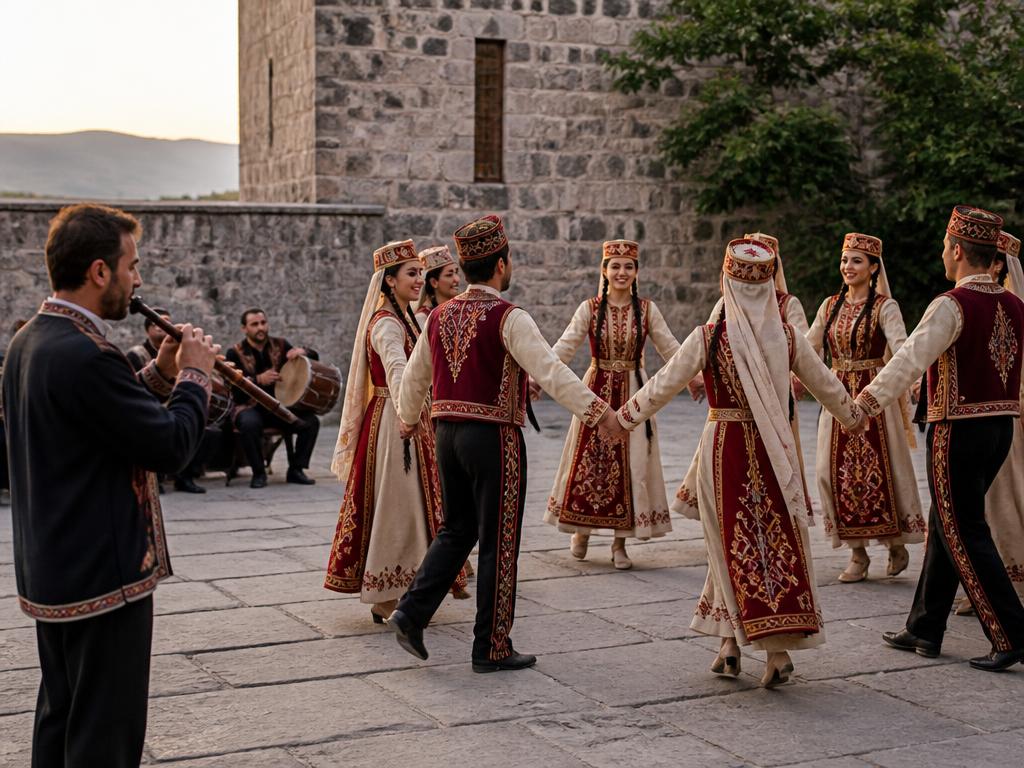
The circle opens for everyone.
Live music and dance run through both days of the festival in the courtyard.
Plan your visit